

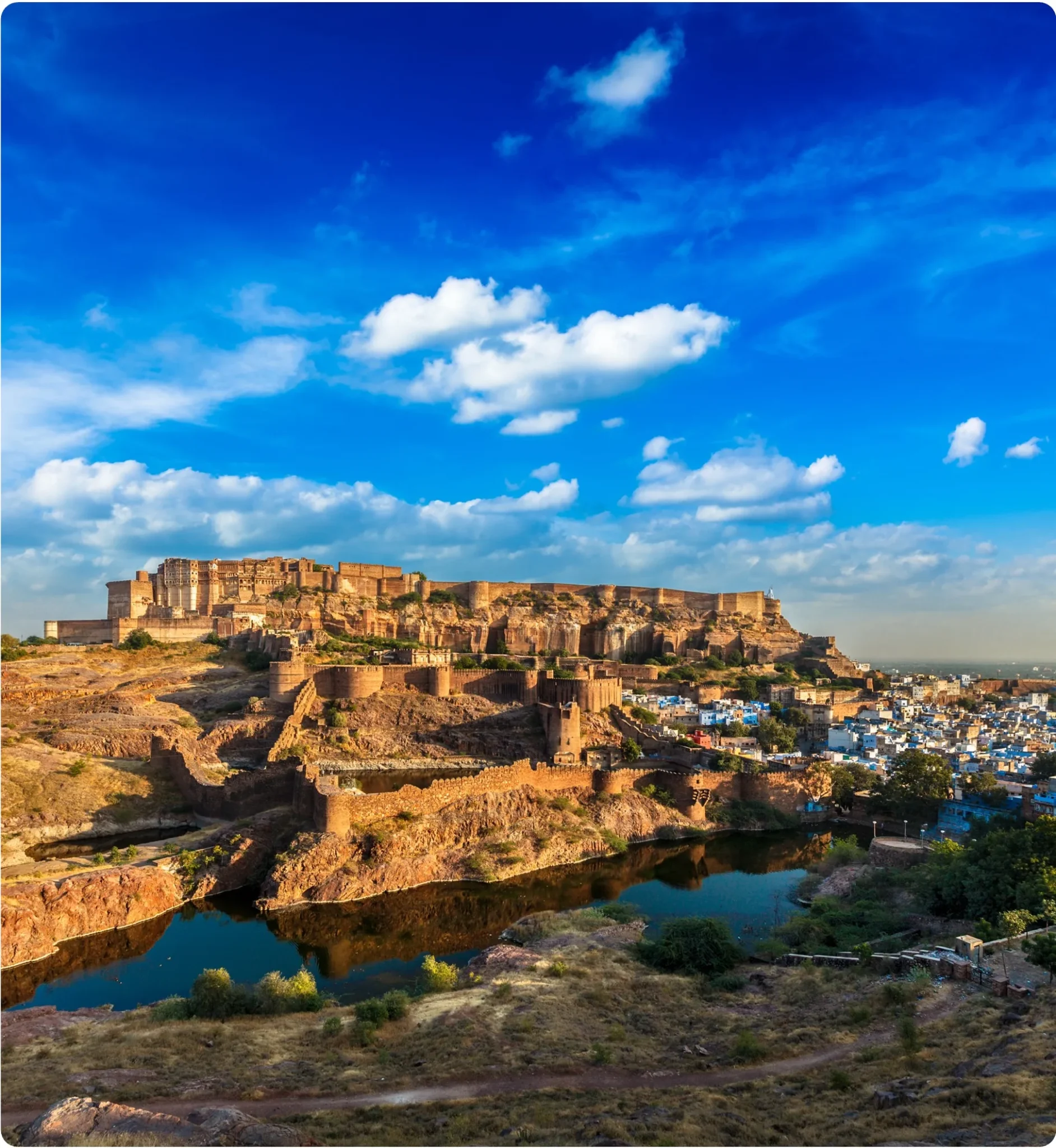
Imagine a sun-scorched day in northwestern India. Dust swirls in the air above the golden dunes of the Thar Desert, and the temperature climbs close to 50 degrees. Here, in India’s largest state, Rajasthan—where fragile infrastructure, low literacy rates, and limited resources challenge daily life—one of the country’s most ambitious energy initiatives is taking shape.
In the mountains of the Sirohi district, where the Aravalli range cuts through the landscape, Avaada Group is developing a massive energy storage project—a so-called water battery. The project, named the Kadambari Pumped Storage Project, will have a capacity of 1,200 MW and become a cornerstone in both Rajasthan’s and India’s green transition.
Rajasthan is known not only for its palaces and deserts but also for its enormous solar energy potential. The state leads India in installed renewable energy capacity with 29.98 GW. Avaada is already among the pioneers, with vast solar and wind parks in the region. But to unlock the full potential of green energy, storage is essential—and that is where the Kadambari Pumped Storage Project comes into play.
With an investment of €616 million (approx. DKK 4.6 billion) over the next 5–7 years, the Kadambari project is designed to ensure that Rajasthan—and ultimately India—will have sufficient electricity, even during peak demand. Not only in the middle of the day when the sun is shining, but also in the evening, when millions of families switch on lights, cook dinner, and turn on fans in the heat.
The principle of a water battery is both simple and innovative. When the sun is at its peak and produces more energy than the grid can absorb, surplus electricity is used to pump water up into a higher reservoir. Later, as electricity demand rises in the early evening, the water is released back down through turbines into a lower reservoir. Along the way, electricity is generated to stabilize the grid. The system can then be recharged using surplus solar energy—without straining the grid. Like a battery cell, but powered by water and gravity instead of lithium and chemicals.
It is precisely this flexibility that makes water batteries indispensable in a world where renewable energy supply fluctuates with the weather. Avaada’s water battery will serve as a stabilizing element in the region’s green infrastructure.
With the Kadambari water battery, Avaada is not only powering the future—it is also setting a new standard for how green energy can be developed in a holistic way. Through the Selected Alternatives Fund’s investment in the Brookfield Transition Fund I, you as an investor are part of this journey.
This project is not just about efficient turbines and reservoirs—it is about building a green infrastructure that works seamlessly. A project that creates jobs, supports growth, and accelerates the green transition.
As an investor in the Selected Alternatives fonden, you are indirectly a co-investor in Avaada Group—one of India’s leading renewable energy players. Through the fund’s investment in the Brookfield Global Transition Fund I, you gain exposure to projects like the Kadambari Pumped Storage Project—an ambitious water battery in the state of Rajasthan.


